Interpreting the Data
The trouble with lots of data is realy what do you do with it? and of course it is sometimes difficult to know, especially when you first start. However, LORAWAN lends itself to different purposes, real-time monitoring and long term analysis.
Real-time monitoring - I.e. what is happening now! in our case is what is the temperature in the polytunnel or shed, given the device is measuring every 15 minutes its going to be pretty up to date, so we have a basic 'Current Status' report. But real time could equally raise an alarm or send you a text, for example wheely bin sensors are telling the council when the bin is full!
Long term analysis - looking at the data over time, with graphs etc. really depends on what you want, as long as the data is recorded in a suitable database then current software tools allow for a wide range of visual display which 'hopefully' will be useful.
FarmIT Online - Climate and Environment - Lorawan and IOT
The data from our devices ends up on our server in the cloud! in an Micorosft SQL Server Database. Accessing the data, how things are configured, what alarms are defined, how your change things is all down to the software interface, Sometimes called the dashboard! more techi speak!
SO! our device data goes to our FarmITOnline server and is managed via the users FarmITOnline Account
FarmIT Online Climate and Environment Menu
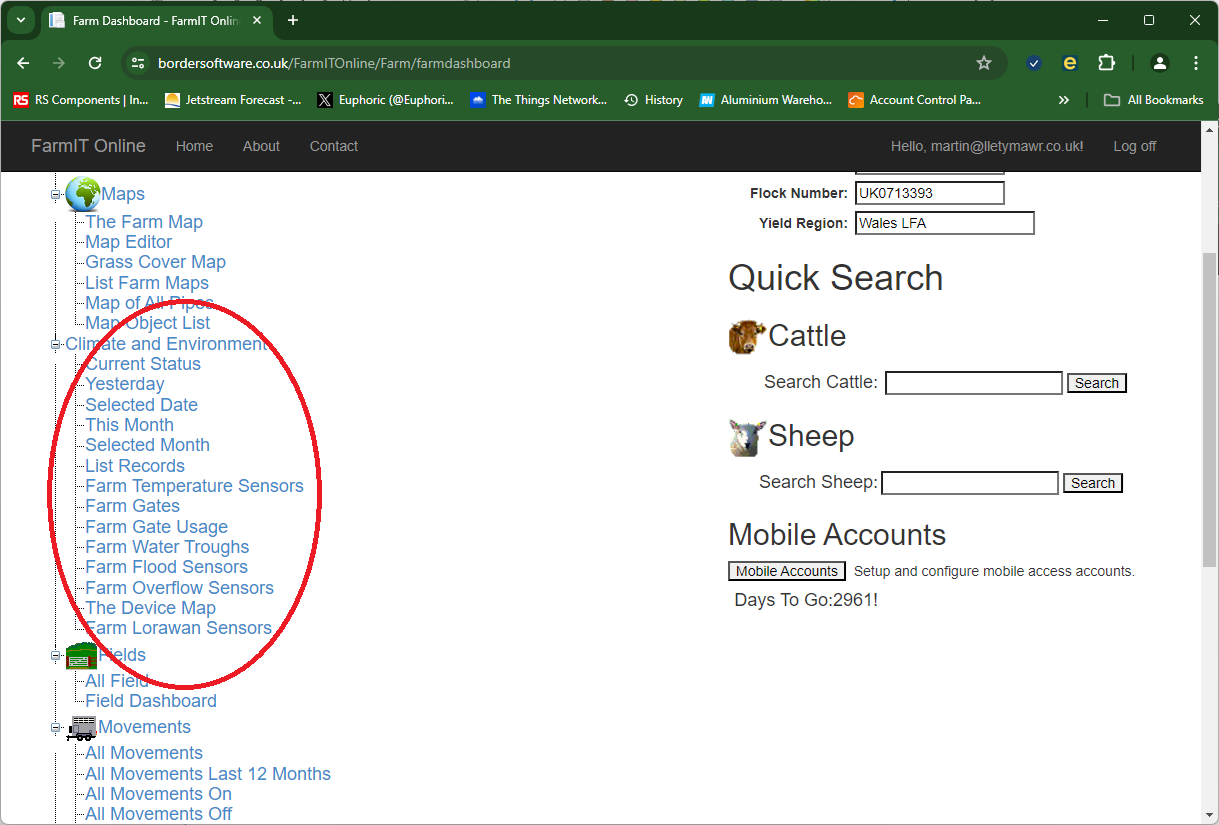
FarmITOnline is accessed through a web browser, you login and get access to your farm data. You can call it a dashboard if you like! to us it is a web based application, with menus and forms ( my dashboard is in my car!)
You will also note we have stopped calling things IOT devices and now call them Gates, Water troughs, Temeprature sensors etc. We still have a report of all our lorawan devices, but as this grows the reports for sensors, gates etc is more useful.
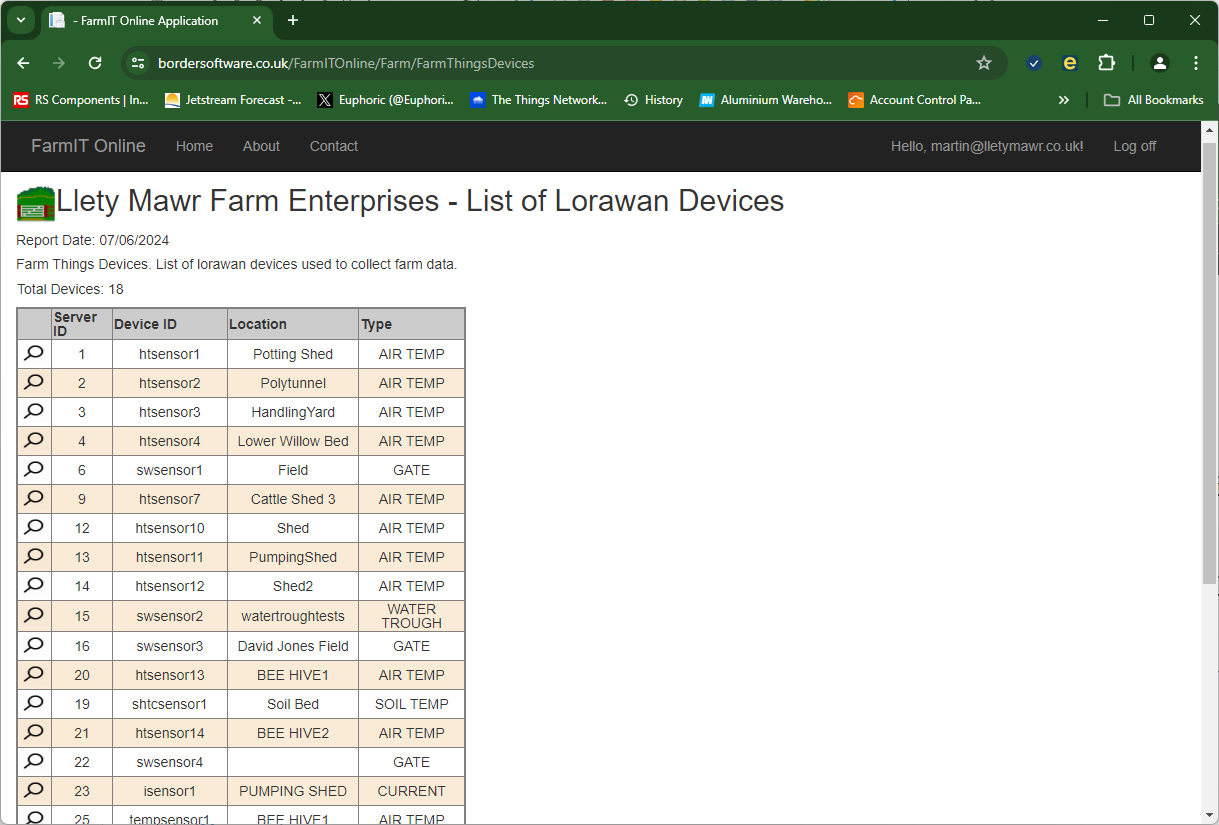
Each device is configured to its role, what job it is actually doing, monitoring a gate, an overflow sensor in a water culvert, but basically the device is a switch! temperator sensor etc
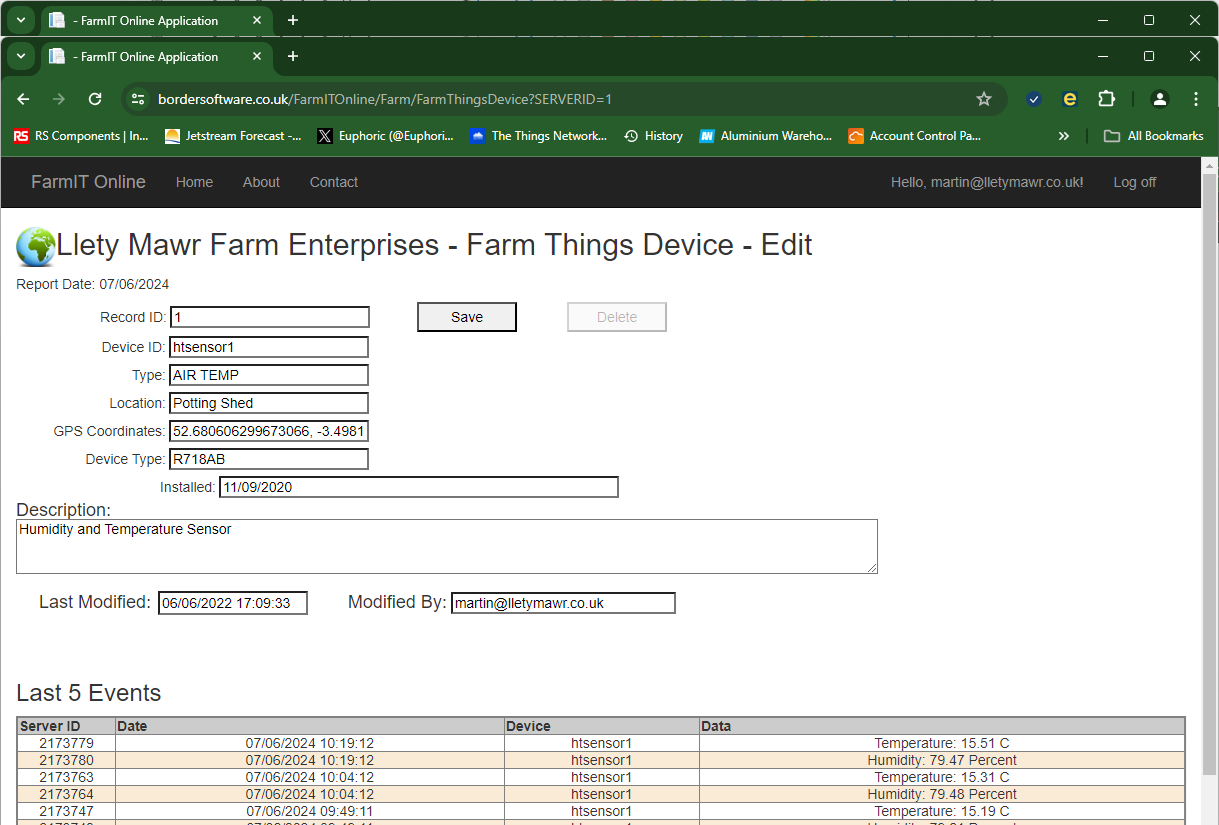
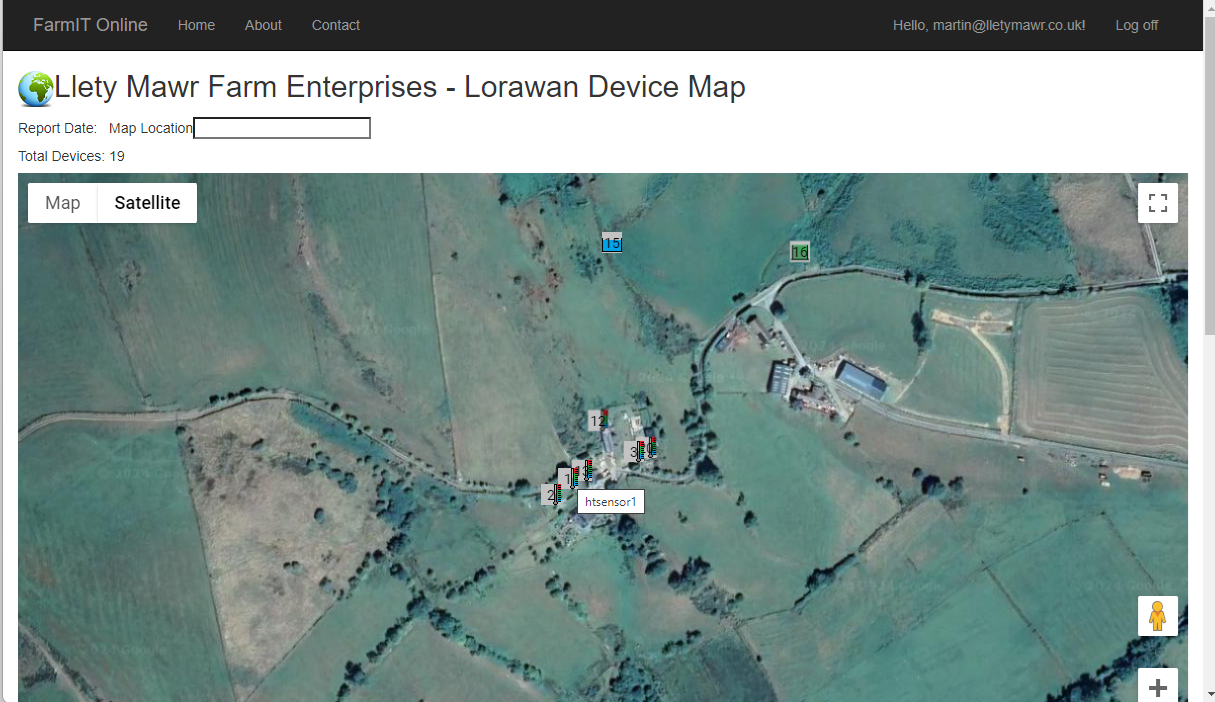
We can set the location of the device and its GPS coordinates, most devices do not send their GPS location, we do this using our FarmIT Mobile andriod phone app!. For example when we install the sensor we record were it is. This means we can then view the sensors on google maps and remind ourselves were we left them.
Real Time Alarms
So the device sends the data to our server, which identifies the device and the type of data, we know which device the data comes from and whethers its a temperature sensor, gate, water trough etc. The next bit is then easy to understand, we can define limits for temperature, we know if the gate is open or closed, we know if the water trough is full, overflowing or empty. We can then email you to do somethings, raise the ALARM!
THE WATER TROUGH IS EMPTY!
Not difficult this one, a basic float switch triggers the alarm, the server emails you and you go and fix it. This also means a lot less time spent checking water toughs that could be miles away!
THE CULVERT IS BLOCKED!
Again a basic float switch triggers the alarm, the server emails you and you go and fix it. Hopefully before the culvert blockage creates a flood and sends water cascading into the local primary school!
THE GATE IS OPEN!
Even easier, a basic magnetic reed switch in the gate tells us if it open or closed, left open and you get the email! you go and close it. Or you go to find your livestock!
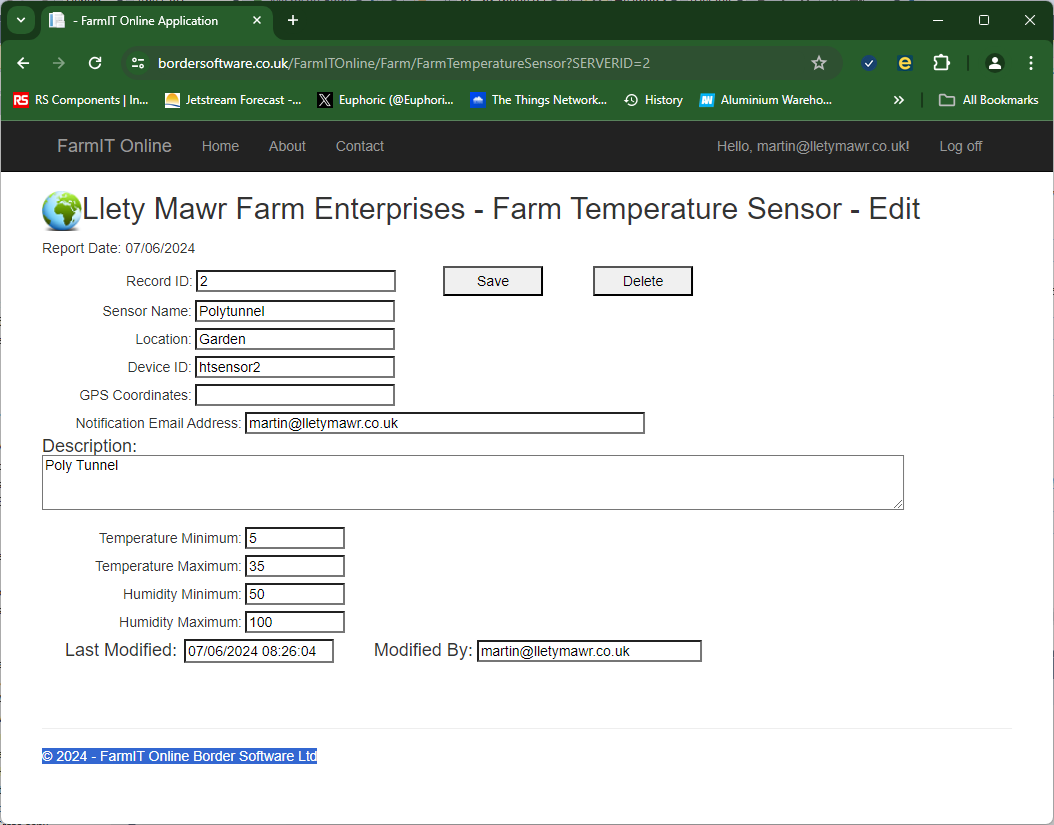
THE POLY TUNNEL TEMPERATURE IS BELOW 5 DEGREES!
Right so you define the low temperature, if it drops below this value you get the email! could that be useful? well it has saved my plants so YES!
Application of LORAWAN and IOT Devices
So we do not need to get too techi to understand how this may help us, and we do not need to know how it works, we just need to decided if it is useful!
Batteries!
Most of the devices we use are battery powered, most have two 3.6v lithum batteries. Battery life is good but the actual operation of the device may depend on its distance from the base station antenna and the line of site. This effects the signal strength and therefore the range. We have found our devices that are furthest away stop working first for example after two - three years. But still not bad.
Heart Beats
The devices that are basic switchs also have a heart beat signal. Although the device only sends when the switch status changes, it also sends a regular heart beat. If the heart beat stops we can investigate. The tempearture sensors are more obvious as you stop getting the temperature.
After 3 years is the data interesting?
YES! we have identified wide changes of temperature across the farm. Cold air pockets in valley bottoms (which can be 10 degrees lower than the top of the hill). That the sun being out warms things up very quickly. In fact the temperature and humidity changes in such corrolation with the sun being out, you can actually tell when a cloud arrives on a clear day. Our polytunnel for example can go up by 10 degree in 30 minutes. We know our frost heater in our pumping shed is holding a steady 6 degrees on even the coldest of nights. That the humidity in our cattle shed can be 100% (even though the roof is NOT leaking). That cattle in the shed are actually heating it! We know people actually do use our footpaths. We know that we need more water storage!. And finally that our bees are alive and busy in the hive, on a hot day cooling themselves and on a cold day warming.
Llety Mawr Live - demonstrates the possibilities of lorawan devices and data collection....
Summary
LORAWAN may be very techy but if you forget that and consider the possibilities then it could be extremely useful on farm. You could say it is a solution looking for a problem! but like the internet, it maybe that we have to think just how we may use it. Is it the future NO it is here right now!